
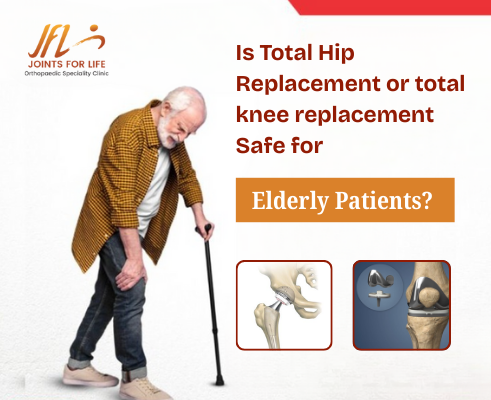
A Complete Geriatric Care Guide
As people age, joint pain and stiffness can slowly turn everyday movements into difficult tasks. Conditions like advanced arthritis, cartilage loss, and reduced joint strength often affect mobility and independence in older adults. Many families worry whether major orthopedic procedures are safe at an advanced age. Guidance from an experienced Orthopedic Surgeon, a qualified Knee Replacement Surgeon in Kharadi, or a specialist offering Joint Replacement in Kharadi is often sought to understand real risks and realistic outcomes before making a decision.
This article explains, in simple and clear terms, how hip and knee replacement procedures affect elderly patients, what medical science says about safety, and how careful planning makes these surgeries successful even in geriatric age groups.
Understanding Joint Problems in Elderly Patients
With age, joints naturally undergo wear and tear. The protective cartilage becomes thinner, joint lubrication decreases, and bones may start rubbing against each other. Common causes of severe joint damage in elderly individuals include:
- Osteoarthritis
- Long-standing joint injuries
- Degenerative joint disease
- Reduced bone density
- Muscle weakness around joints
When pain becomes constant and limits daily activities such as walking, sitting, or sleeping, surgical replacement may be considered as a medical solution rather than a lifestyle choice.
What Is Total Hip Replacement?
Total hip replacement involves removing the damaged parts of the hip joint and replacing them with artificial components made of metal, ceramic, or high-grade plastic. The goal is to restore smooth movement, reduce pain, and improve stability.
For elderly patients, this procedure is often recommended when:
- Pain persists despite medications and therapy
- Walking becomes unsafe
- Hip fractures affect joint integrity
- Quality of life declines significantly
Modern surgical techniques have made hip replacement more predictable and less physically stressful than in the past.
What Is Total Knee Replacement?
Total knee replacement focuses on resurfacing damaged knee joint surfaces to relieve pain and restore movement. It is commonly advised for advanced arthritis or deformity affecting knee function.
In older adults, knee replacement is considered when:
- Standing or walking becomes painful
- Knee stiffness restricts bending
- Sleep is disturbed due to joint pain
- Supportive devices are no longer helpful
Advances in implant design and surgical precision have improved long-term outcomes, even in patients above 65 or 70 years of age.
Is Age a Risk Factor for These Surgeries?
Age alone is not considered a deciding risk factor. Medical research shows that overall health, not the number of years lived, determines surgical safety.
Factors that matter more than age include:
- Heart and lung health
- Blood sugar control
- Bone strength
- Body balance and muscle condition
- Ability to participate in rehabilitation
Many elderly patients recover well when surgeries are planned with proper medical evaluation and post-operative care.
Pre-Surgery Evaluation in Geriatric Patients
Before recommending surgery, doctors perform a detailed health assessment to reduce risks. This usually includes:
- Blood tests
- Cardiac evaluation
- Imaging studies
- Medication review
- Fall risk assessment
This preparation helps identify concerns early and allows doctors to adjust surgical plans accordingly, making procedures safer for older individuals.
Safety Improvements in Modern Joint Replacement
Joint replacement procedures today are very different from those performed decades ago. Safety has improved due to:
- Minimally invasive surgical approaches
- Better anesthesia techniques
- Faster mobilization after surgery
- Improved pain management protocols
- Advanced infection control practices
These improvements help elderly patients recover faster and reduce complications such as prolonged bed rest or muscle loss.
Recovery and Rehabilitation in Elderly Patients
Recovery does not end with surgery. Rehabilitation plays a key role, especially in older adults. A structured recovery plan focuses on:
- Gentle movement within 24–48 hours
- Muscle strengthening exercises
- Balance training
- Gradual return to daily activities
With supervised rehabilitation, many elderly patients regain independence and confidence in movement within weeks to months.
Benefits of Hip and Knee Replacement in Old Age
When performed for the right reasons, joint replacement can offer meaningful benefits such as:
- Significant pain relief
- Improved walking ability
- Better posture and balance
- Reduced dependency on pain medications
- Enhanced overall quality of life
For many seniors, these benefits outweigh the temporary discomfort of surgery and recovery.
Common Concerns and Misconceptions
“Elderly people cannot tolerate surgery”
Medical evidence shows that well-assessed elderly patients tolerate joint replacement safely.
“Recovery takes too long”
Recovery timelines vary, but age alone does not delay healing when rehabilitation is followed correctly.
“Artificial joints won’t last”
Modern implants are designed to last many years, often longer than expected life expectancy in older age groups.
When Surgery May Not Be Recommended
Joint replacement may be postponed or avoided if:
- Severe uncontrolled medical conditions exist
- Active infections are present
- Bone quality is extremely poor
- Patient is unable to participate in rehabilitation
In such cases, alternative pain management and supportive care options are explored.
Making an Informed Decision
Deciding on hip or knee replacement should involve:
- Clear understanding of benefits and risks
- Discussion with family members
- Realistic expectations about recovery
- Commitment to post-surgical care
An informed decision leads to better outcomes and patient satisfaction.
Final Thoughts
Safety in joint replacement is determined by preparation, technique, and recovery planning—not age alone. When guided by an experienced Orthopedic Surgeon, supported by insights from a trusted Knee Replacement Surgeon in Kharadi, or evaluated for advanced Joint Replacement in Kharadi, elderly patients can make informed decisions with confidence and clarity about their mobility and long-term well-being.
Frequently Asked Questions (FAQs)
Is joint replacement safe after the age of 70?
Yes, many patients above 70 undergo successful joint replacement when overall health is stable.
How long does recovery take for elderly patients?
Initial recovery usually takes a few weeks, while full functional improvement may take a few months.
Can elderly patients walk independently after surgery?
With proper rehabilitation, many elderly patients regain independent mobility.
Are complications common in geriatric joint replacement?
Complications are uncommon when pre-surgical evaluation and post-operative care are properly followed.
Does joint replacement reduce long-term pain?
Yes, pain reduction is one of the most consistent outcomes reported by elderly patients.