
Direct Anterior Total Hip Replacement: Benefits, Recovery & What Patients Should Know
Hip pain can gradually take over your daily life—limiting movement, disturbing sleep, and affecting independence. When conservative treatments fail, Total hip replacement becomes a reliable and life-changing solution. In recent years, the direct anterior approach has gained significant attention for being less invasive and promoting faster recovery compared to traditional hip replacement surgery.
As an orthopedic specialist, I often meet patients who are unsure about the procedure, recovery, and long-term outcomes. This guide is designed to help you understand everything you need to know—clearly and confidently—so you can make an informed decision.
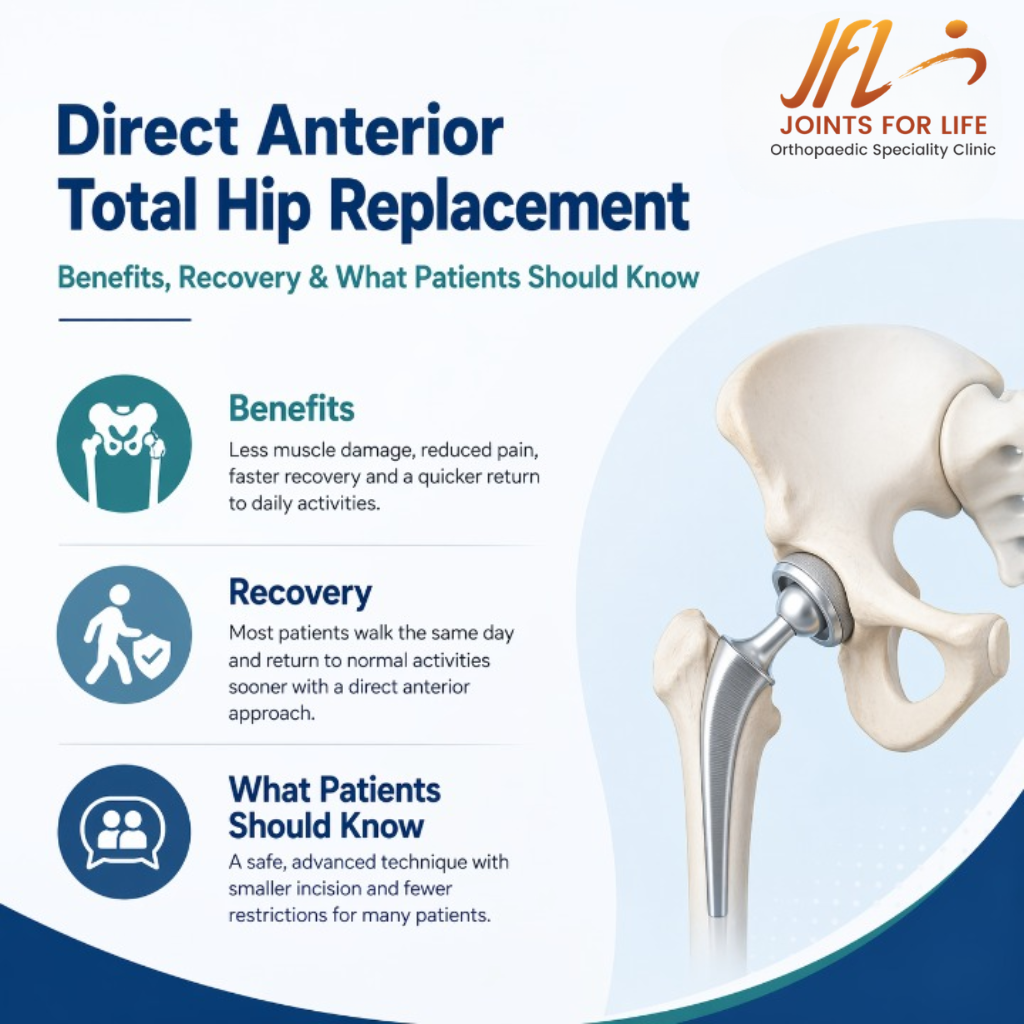
What Is Direct Anterior Total Hip Replacement?
Direct anterior hip replacement is a modern surgical technique where the hip joint is accessed from the front (anterior) of the body rather than from the side or back.
Key Difference from Traditional Approach
Unlike traditional hip replacement surgery, this method:
- Avoids cutting major muscles
- Works between natural muscle planes
- Minimizes tissue damage
This muscle-sparing technique is one of the main reasons why patients often experience quicker recovery and less post-operative discomfort.
Why Is Total Hip Replacement Needed?
You may require Total hip replacement if you are experiencing:
- Severe arthritis (osteoarthritis, rheumatoid arthritis)
- Hip joint damage due to injury or fracture
- Persistent pain not relieved by medication or physiotherapy
- Difficulty in walking, climbing stairs, or daily activities
When pain starts affecting your quality of life, surgery becomes a practical and effective option.
Benefits of Direct Anterior Hip Replacement
1. Faster Recovery
Because muscles are preserved, patients often:
- Start walking within a day
- Experience shorter hospital stays
- Return to daily activities sooner
2. Less Pain After Surgery
Minimal tissue damage leads to reduced inflammation and post-operative pain.
3. Lower Risk of Dislocation
The anterior approach maintains the natural stability of the hip joint, reducing the chances of dislocation.
4. Smaller Incision
Cosmetically smaller scars are an added advantage for many patients.
5. Improved Mobility
Patients often report a more “natural feeling” hip movement after recovery.
Step-by-Step Overview of the Procedure
Understanding the process can ease anxiety and help you prepare better.
Before Surgery
- Complete medical evaluation
- Blood tests and imaging (X-ray/CT scan)
- Discussion of medical history and medications
During Surgery
- A small incision is made at the front of the hip
- Damaged bone and cartilage are removed
- Artificial components (implant) are placed
- Muscles are preserved rather than cut
After Surgery
- Monitoring in recovery room
- Early mobilization within 24 hours
- Guided physiotherapy begins immediately
Recovery Timeline: What to Expect
Recovery varies from person to person, but here’s a general timeline:
Week 1–2
- Walking with support (walker or cane)
- Mild swelling and discomfort
- Basic physiotherapy exercises begin
Week 3–6
- Improved mobility and strength
- Reduced dependence on walking aids
- Resuming light daily activities
Week 6–12
- Walking independently
- Returning to work (depending on job type)
- Continuing strengthening exercises
After 3 Months
- Near-normal function
- Participation in low-impact activities like walking or swimming
Who Is the Right Candidate?
Direct anterior hip replacement is suitable for many patients, but not everyone.
Ideal Candidates:
- Patients with moderate to severe arthritis
- Individuals looking for faster recovery
- Those with good bone quality
Not Always Suitable For:
- Severely obese patients
- Complex hip deformities
- Patients with prior hip surgeries
A proper clinical evaluation helps determine the best surgical approach for each individual.
Direct Anterior vs Traditional Hip Replacement Surgery
Feature | Direct Anterior Approach | Traditional Approach |
Muscle Damage | Minimal | More |
Recovery Time | Faster | Moderate |
Pain Level | Less | More |
Dislocation Risk | Lower | Slightly Higher |
Hospital Stay | Shorter | Longer |
While both techniques are effective, the anterior approach is often preferred for its quicker rehabilitation benefits.
Practical Tips for Faster Recovery
From my experience treating patients undergoing Joint Replacement in Kharadi, recovery outcomes improve significantly when patients follow these guidelines:
✅ Do’s
- Follow physiotherapy strictly
- Maintain a healthy diet rich in protein
- Keep the surgical area clean and dry
- Stay active within recommended limits
❌ Don’ts
- Avoid sudden twisting movements
- Do not skip follow-up visits
- Avoid high-impact activities early on
Risks and Considerations
Although generally safe, like any surgery, it carries some risks:
- Infection
- Blood clots
- Nerve injury (rare)
- Implant wear over time
However, with modern techniques and proper care, complication rates are low.
Long-Term Outcomes
The success rate of Total hip replacement is very high. Most implants last 15–20 years or more with proper care. Patients often regain:
- Pain-free movement
- Improved quality of life
- Ability to return to hobbies and daily routines
Conclusion: Making the Right Decision
Direct anterior total hip replacement is a significant advancement in orthopedic care, offering faster recovery, less pain, and better functional outcomes compared to traditional hip replacement surgery.
If you are struggling with chronic hip pain and limited mobility, this procedure can truly transform your quality of life. The key lies in proper evaluation, choosing the right surgical approach, and committing to post-operative rehabilitation.